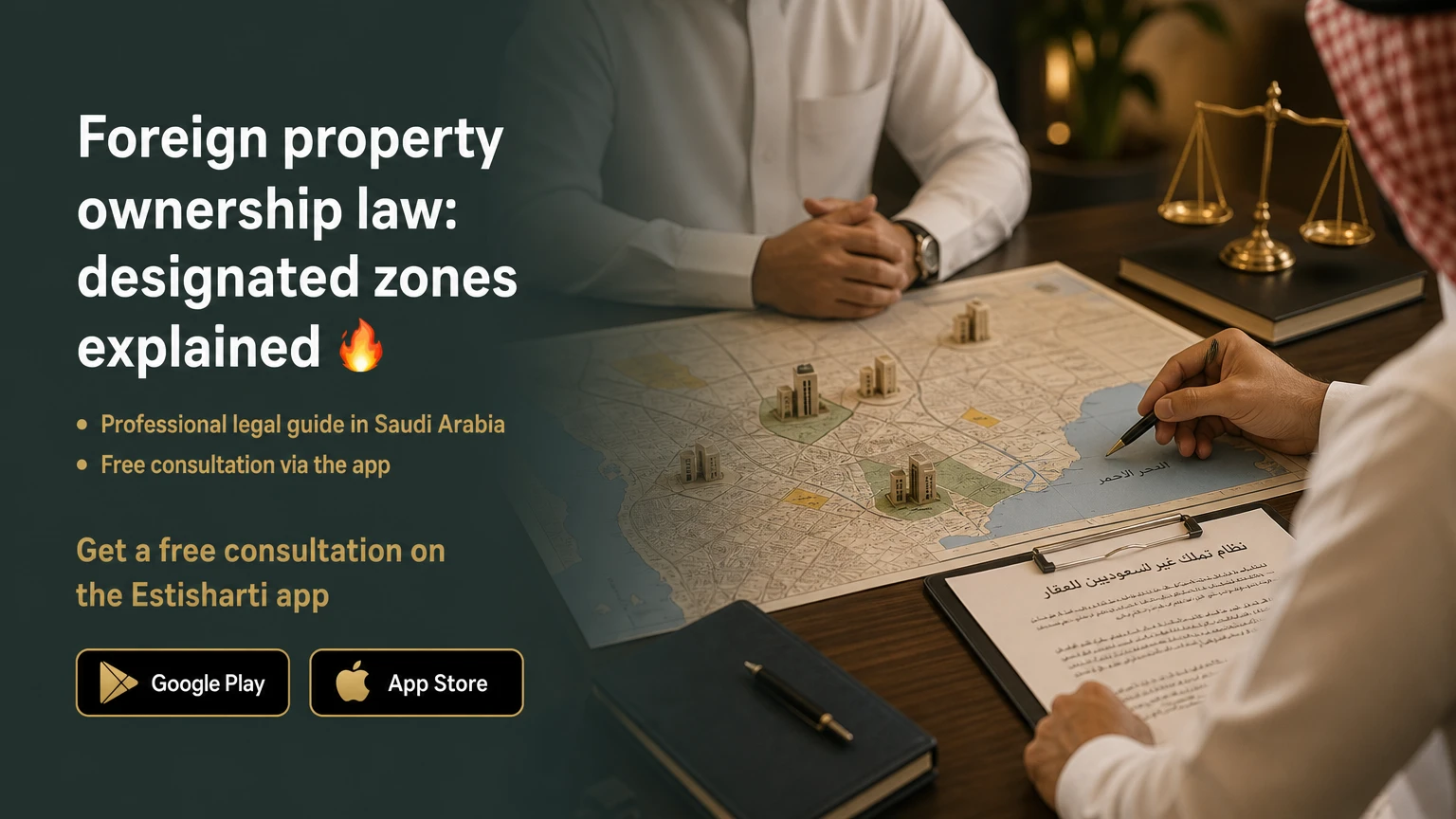
The foreign property ownership law designates specific zones where non-Saudis can own real estate. These zones are carefully regulated to encourage investment while protecting national interests. In Saudi Arabia, designated zones under the foreign property ownership law are mapped areas where foreign nationals may legally acquire property, subject to rigorous standards. The purpose is to manage urban growth, promote economic diversification, and safeguard key local priorities. For detailed advice and answers on where and how foreigners can own property in the Kingdom, you can reach a licensed Saudi lawyer through the Estisharti app—trusted by thousands navigating Saudi real estate law.
- Designated zones are specific areas where foreigners may legally own property in Saudi Arabia.
- These zones are outlined by the government, often in urban centers or economic clusters.
- Foreign ownership is regulated under the latest executive regulations and may require special permits.
- Restrictions apply outside these zones; only Saudis or approved entities can own elsewhere.
- To ensure compliance, use official portals such as the Najiz Platform or consult Estisharti for current procedures.
What Are Designated Zones for Foreign Property Ownership in Saudi Arabia?
Designated zones, as defined by recent regulations, are the only areas where non-Saudis can purchase, own, or invest in real estate. These are typically large-scale projects or development zones—like parts of Riyadh, Jeddah, or future economic cities—officially mapped and published by government authorities. Article 5 of the most recent executive regulations requires the Ministry of Justice to update and circulate details of all such areas, ensuring transparency for potential buyers. Consult the Bureau of Experts and the Ministry of Justice for the current official list. We notice through Estisharti consultations that the majority of eligible zones are in areas prioritized for international investment and urban development. Buying outside designated areas is strictly reserved for Saudis, except under narrow exemptions. For a detailed understanding of where foreigners can buy in 2026, see our guide: Can foreigners buy property in Saudi Arabia in 2026?
Takeaway: Designated zones are the only areas where non-Saudis can legally acquire property in Saudi Arabia, and these zones are periodically updated by the government.
What Are the Legal Requirements for Foreigners Buying Property in Designated Zones?
Foreigners must comply with strict statutory requirements to buy property in Saudi designated zones. Article 2 of the foreign property ownership law mandates that purchasers obtain a special license via the Najiz Platform before completing any transaction. Additional requirements include proof of legal residency, no criminal background, and, for companies, clear documentation of ownership structure. Commercial investors must demonstrate their economic contribution and adherence to Saudi anti-money laundering rules (see My.gov.sa National Portal for application procedures). From our Estisharti experience, the main challenge is meeting documentation standards—especially for entity buyers. Some buyers overlook municipal approval or misunderstand permitted property types. For company or high-value deals, expect transparency checks and due diligence similar to those in foreign labor regulations. Operating outside these rules risks nullifying the purchase and severe penalties under Article 10 of the law.
Takeaway: Foreign buyers must hold residency, obtain a Najiz license, and meet all due diligence standards to own property in a designated zone.
Which Areas and Property Types Are Usually Open to Foreign Ownership?
The Saudi government specifies designated zones for foreign property ownership in urban economic projects, high-profile residential towers, and areas earmarked for international investment. Residential apartments, commercial spaces, and off-plan properties in these developments are commonly eligible. However, ownership in strategic or restricted areas—such as border zones or sites of national importance—is not permitted. The Ministry of Justice provides updates on mapped zones. We often see on the Estisharti legal consultation platform that most international buyers inquire about high-value projects in Riyadh and coastal cities, where property titles are digital and restricted to specific developments. Always confirm property type eligibility with an official or request a free legal consultation to avoid critical mistakes.
Takeaway: Foreign ownership is generally limited to specific projects and property types (residential, commercial) inside mapped investment zones.
What Are the Main Restrictions and Risks for Foreigners Owning Property Outside Designated Zones?
Foreigners are strictly unable to own real estate outside the designated zones except with rare, high-level exemptions. Article 9 of the foreign property ownership law criminalizes unauthorized purchases, and violators risk loss of title, fines, and even deportation. We have found at Estisharti that confusion often arises when buyers rely on verbal assurances from sellers rather than official approvals. Foreigners should rely exclusively on the Najiz Platform and official government releases to verify a property's eligibility. Ownership of agricultural or border-adjacent land is never permitted for foreign nationals. For a breakdown of common pitfalls and how to verify properties, see our resource: Can foreigners buy property in Saudi Arabia in 2026?
Takeaway: Buying property outside government-designated zones is illegal for foreigners, carrying severe legal and financial risks.
How to Secure Your Rights and Complete a Safe Foreign Purchase in Saudi Arabia
To safely complete a purchase within a designated zone, begin by confirming the property's status on the Najiz Platform and requesting all relevant ministry documentation. Next, submit your license application and documentation—residency, financial proof, background checks—through official portals. Secure clear written approval before transferring funds. We advise, from extensive Estisharti app experience, that buyers retain a licensed Saudi lawyer via Estisharti to review contracts and finalize deals, avoiding costly errors. Legal title transfers are always digital through Najiz, with fees and taxes clearly itemized. Always check for the latest rule changes at the Bureau of Experts or through a free consultation. Completing each step in order ensures your investment, residency, and ownership rights are secure.
Takeaway: Meticulous compliance, using digital verification and legal advice, ensures safe, legal foreign property ownership in Saudi designated zones.
Recent Developments and Trends: What Should Foreign Investors Expect from 2026 Onwards?
The Saudi foreign property ownership framework has seen frequent updates, with new zones announced and investment regulations refined each year. In 2026, authorities are expected to expand designated zones as part of Vision 2030, especially in major urban and commercial centers. However, periodic reassessment means zones may be added or revoked—full compliance remains essential. Data from Estisharti app consultations indicate high demand for residential projects in new economic cities. Stay informed with regular checks on the Ministry of Justice website and the Saudi Bar Association, or request up-to-date guidance via the Estisharti legal consultation platform.
Takeaway: The scope of designated zones will likely expand after 2026, but rule changes mean foreign buyers should always confirm eligibility before purchase.
When Should You Consult a Lawyer for Foreign Property Transactions?
Expert legal review is crucial at every stage—zone verification, contract drafting, due diligence, and digital title transfer. Many Estisharti users discover potential problems only after a legal specialist checks ownership records or clarifies government approvals. The Saudi property system is digital—but even simple errors in document submission can delay registration or forfeit rights. It is highly recommended to book a free legal consultation with Estisharti before any transaction or investment in the Kingdom. This step secures your purchase and prevents costly mistakes.
Takeaway: Involving a qualified Saudi lawyer from the beginning protects your investment and guarantees lawful property acquisition.
Designated zones in Saudi Arabia’s foreign property ownership law are government-approved areas where non-Saudis may purchase, own, or invest in real estate, subject to specific licensing and compliance requirements.
- Check the latest list of designated zones on the Najiz Platform.
- Obtain legal residency and required documentation.
- Apply for a property ownership license through official government channels.
- Submit compliance documents and undergo background checks.
- Obtain written approval before making payments or signing contracts.
- Complete the digital title deed transfer via Najiz.
- Consult a licensed Saudi lawyer at Estisharti to finalize your purchase.
| Step | Timeframe | Official Channel |
|---|---|---|
| Zone Verification | 1-3 days | Najiz Platform |
| License Application | 10-30 days | Najiz/Ministry of Justice |
| Due Diligence & Compliance | 2-4 weeks | Ministry of Justice |
| Digital Title Transfer | 1-2 days | Najiz Platform |
This content offers general information about Saudi laws and does not replace personalized legal advice. Always consult a licensed Saudi lawyer or official authorities for your specific situation.
Conclusion
The Estisharti app offers free legal consultations from licensed lawyers across the Kingdom — start your consultation today.
Frequently Asked Questions
How do I know if a property is in a designated zone for foreigners?
You must check the property’s eligibility through the Najiz Platform or verify with the Ministry of Justice. Only mapped zones published by official authorities are open to foreign ownership.
Can a foreigner buy land or only apartments in Saudi Arabia?
In designated zones, foreigners may purchase both apartments and certain commercial properties, but land ownership is more restricted and often subject to specific project approvals. Always verify property type eligibility using official platforms or a legal consultation.
What are the risks of buying property outside a designated zone?
Buying outside a designated zone is illegal for foreigners and may result in loss of property rights, fines, and possible deportation. Always verify zones and title eligibility using the Najiz Platform or consult a Saudi lawyer.
Are designated zones likely to increase in the coming years?
Saudi authorities have announced plans to expand designated zones as part of Vision 2030, so more areas in major cities and economic hubs may become eligible for foreign ownership. Always check for updated lists on official websites.
Do I need a lawyer to complete a property purchase as a foreigner?
While not required by law, hiring a lawyer is highly recommended to verify compliance, manage documentation, and prevent costly errors. Book a free consultation through Estisharti for legal guidance.
Is the foreign property title process digital in Saudi Arabia?
Yes, the title transfer and registration process for property purchases—including those by foreigners in designated zones—is now fully digital through the Najiz Platform to enhance security and transparency.
Where can I get up-to-date news about changes in foreign property ownership laws?
The best sources are the Ministry of Justice website, Bureau of Experts at the Council of Ministers, and legal updates offered through the Estisharti app.
Read Also
- Saudi Labor Law 2026: full guide for foreign employees
- Can foreigners buy property in Saudi Arabia in 2026? 🔥
- Online Legal Consultation vs. Traditional Law Firms in Saudi Arabia: Which Should You Choose?
- Best labor lawyer in Riyadh for expat employees
- Wrongful termination lawyer Saudi Arabia — expat rights