
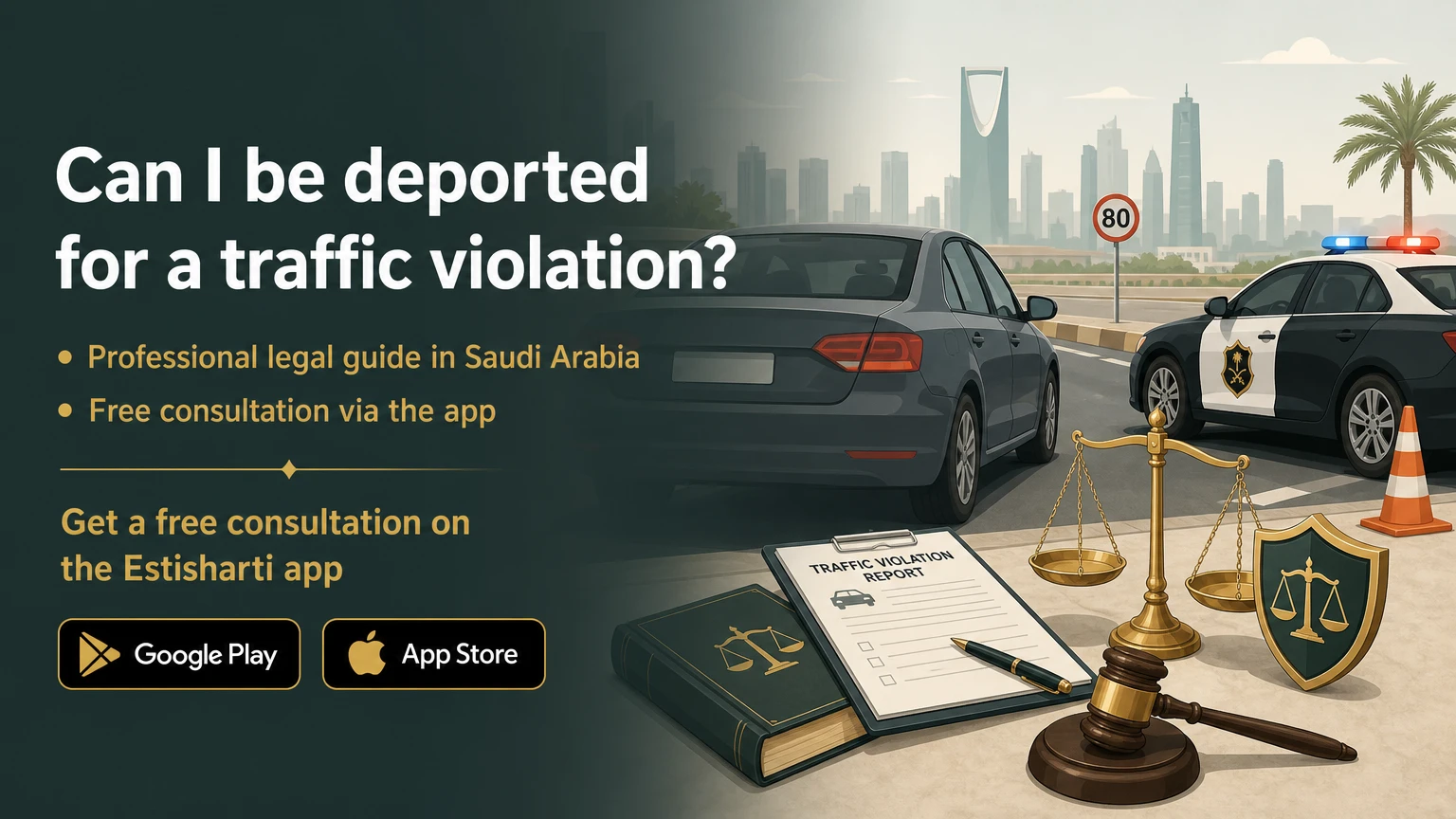
In Saudi Arabia, deportation for a traffic violation is generally unlikely unless the violation is severe or part of repeated offenses. Minor traffic offenses usually result in fines or license suspensions, not deportation. Saudi law distinguishes between minor traffic violations and serious offenses with criminal implications, such as reckless endangerment or incidents resulting in fatalities. Deportation mainly applies to grave breaches of public safety or repeated serious infractions. For clear answers and tailored legal advice on your situation, you can seek guidance from licensed lawyers through the Estisharti app, ensuring your rights and obligations are fully understood according to Saudi regulations.
- Deportation for minor traffic violations in Saudi Arabia is generally not imposed.
- Severe or repeated traffic offenses, especially those risking public safety, may trigger deportation procedures.
- Penalties for common violations include fines, license suspension, or temporary detention—deportation is rare.
- Article 37 of the Law of Traffic and Article 32 of the Residency Law address penalties and administrative measures.
When Does a Traffic Violation Lead to Deportation in Saudi Arabia?
Minor traffic violations, like running a red light or minor speeding, usually lead to fines or administrative penalties as outlined in Article 37 of the Saudi Traffic Law. Deportation is considered only for grave offenses—such as causing death by reckless driving, or multiple serious breaches—especially for expatriates. According to Article 32 of the Saudi Residency Law, deportation may occur if violations threaten public security or safety. Estisharti frequently receives queries from expat drivers fearing deportation for traffic fines, but unless the violation also involves a criminal offense (such as driving under the influence), deportation will not usually result. However, repeat offenders or those with criminal records may be subject to investigation by authorities and, depending on circumstances, deportation orders. Legal consultation is crucial if you’re facing any risk beyond ordinary fines. The Estisharti legal consultation platform offers specific guidance based on the latest regulatory practices and real Saudi court cases involving traffic law breaches.
Takeaway: Deportation in Saudi Arabia for traffic violations occurs only in severe or repeat cases with public safety implications.
What Penalties Apply for Traffic Violations Under Saudi Law?
Saudi Traffic Law (especially Article 37) details graduated penalties for infractions. Fines are the most common, with the amount based on the gravity of the violation. For more serious conduct—like reckless driving, racing, or causing injury or death—penalties escalate to imprisonment or, in rare cases, deportation. Temporary detention and vehicle impoundment may be imposed through administrative orders of the traffic police. The system is designed to improve safety, not to penalize foreigners or workers arbitrarily. Through many free legal consultations on Estisharti, it’s clear that most cases involve administrative penalties, not criminal or immigration consequences, unless there is clear endangerment of life.
Takeaway: Saudi Arabia reserves deportation for only the most serious and repeated traffic violations, while most cases end with fines or license action.
Common Mistakes: When Foreigners Get Deported for Traffic Offenses
From Estisharti’s experience, misunderstandings about Saudi traffic regulations contribute to unnecessary anxiety. Deportation is almost never enforced for a one-off violation unless it includes a criminal aspect (for example, causing death, using falsified documentation, or driving under the influence). One overlooked mistake is ignoring administrative summons or accumulating unpaid fines, which may escalate the situation. Another risk lies in repeated dangerous driving behavior—eventually assessed as a public safety risk, and thus triggering residency investigations. If served with a deportation order or facing enforcement action, it’s essential to act quickly. Consulting a licensed Saudi lawyer via Estisharti ensures that you respond correctly and understand possible remedies through platforms such as the Najiz Platform operated by the Ministry of Justice.
Takeaway: Foreigners are rarely deported for an isolated traffic offense but must respond swiftly if facing repeated or severe allegations.
Deportation for a traffic violation in Saudi Arabia is an administrative measure ordered against expatriates who commit serious traffic crimes or repeated offenses, especially those endangering public safety, as per Article 32 of the Residency Law and Article 37 of the Traffic Law.
- Commit a traffic violation (e.g., speeding, reckless driving).
- Receive an official notice or penalty from traffic authorities.
- If the offense is severe or repeated, authorities investigate circumstances.
- Decision made for fines, license suspension, or potential detention.
- If offense endangers public safety, initiate deportation procedure via administrative order.
- Appeal or review process available via the Najiz Platform.
This content provides general legal information and does not constitute legal advice. For personal legal matters, always consult a licensed Saudi lawyer.
Frequently Asked Questions
Can I be deported for speeding in Saudi Arabia?
Speeding alone, if not part of repeated or dangerous behavior, is not grounds for deportation in Saudi Arabia. Penalties for speeding are usually limited to fines and points on your driving record. For guidance on your case, consult the Estisharti app.
What traffic offenses can actually trigger deportation?
Traffic offenses that could lead to deportation include causing death or serious injuries, repeated dangerous driving, or committing criminal acts behind the wheel, such as using falsified registration documents. Article 32 of the Residency Law allows authorities to deport those threatening public safety.
How can I appeal a deportation decision for a traffic violation?
You can appeal a deportation decision through the Najiz Platform managed by the Ministry of Justice, often with the support of a qualified legal representative. Timely action is critical—seek legal assistance at the earliest opportunity.
Does not paying my traffic fines lead to deportation in Saudi Arabia?
Unpaid fines usually lead to increased penalties or suspension of services rather than direct deportation. Only if the issue escalates and is coupled with other severe violations could deportation be considered. Visit the My.Gov.sa National Portal to monitor and resolve outstanding fines.