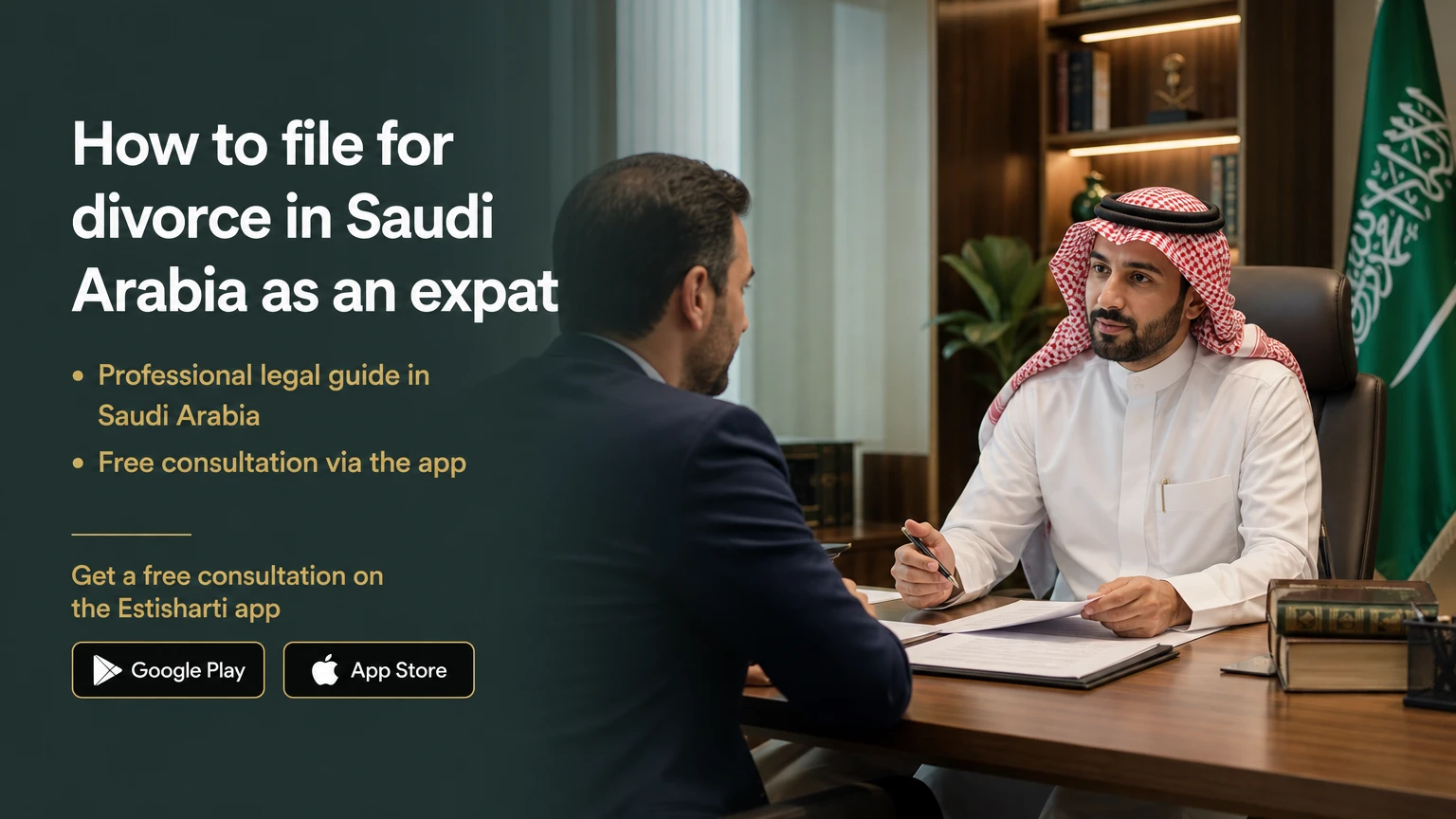
Filing for divorce in Saudi Arabia as an expat requires understanding local laws, submitting the right documents, and navigating family courts. Hiring a qualified lawyer familiar with Sharia and Saudi regulations can simplify the process and ensure your rights are protected. In Saudi Arabia, expats pursuing divorce must adhere to regulations outlined in the Saudi Personal Status Law and coordinate with the country's judicial system. Common challenges include language barriers and unfamiliar documentation requirements, making legal assistance crucial. For expedited advice, the Estisharti app connects you with licensed Saudi lawyers who have deep experience helping expatriates complete divorce proceedings smoothly.
- Expat divorces in Saudi Arabia follow the Personal Status Law, prioritizing Sharia principles and procedural rules.
- The official Najiz platform streamlines digital filing; all applications must include notarized documents and identification.
- Language translation and authentication of foreign certificates are mandatory steps for most expats.
- Legal consultation is strongly advised due to complexities in child custody, alimony, and overseas enforcement.
- Estisharti provides free consultations with Saudi lawyers specializing in expat divorces and international family law.
What are the legal requirements for expat divorce in Saudi Arabia?
Divorce for expatriates in Saudi Arabia is governed by the Saudi Personal Status Law (Royal Decree No. M/73 of 2022), which details procedural and substantive requirements. Expat couples must usually marry in a manner recognized by Saudi courts, and at least one party must hold a valid residency (iqama). If the marriage certificate is foreign, it must be attested by the relevant embassy and translated into Arabic. Both spouses should provide identification documents such as passports and iqama cards.
Article 10 of the Personal Status Law mandates that all divorce petitions specify the type of divorce (talaq, khula, or annulment) and state the reason, such as incompatibility or absence. Article 16 obliges parties to attempt reconciliation through court-appointed mediators before a divorce is finalized.
From Estisharti's experience handling expat divorces, common document errors relate to authentication and translation. For full clarity on legal obligations and the need for witnesses, it's advisable to consult the official Ministry of Justice or use the Estisharti app for personalized guidance.
Takeaway: Expat divorce in Saudi Arabia hinges on proper documentation, legal grounds per Article 10, and official translation and authentication.
How does the divorce procedure work for expats in Saudi family courts?
The divorce process for expatriates begins by submitting a petition to the Personal Status Court via the Najiz Platform. The petitioner completes an online application, uploads authenticated documents, and clearly states the divorce grounds. In Step 2, the court reviews the application, verifies document validity, and may summon both spouses for a hearing.
According to Article 20 of the Personal Status Law, mediation is initiated, and if reconciliation fails, the court proceeds to issue a divorce judgment. For cases involving child custody or alimony, additional sessions are scheduled. The official judgment must then be registered for enforcement. Language and legal differences are common obstacles, but with support from a licensed Saudi lawyer via Estisharti, expats can avoid critical mistakes. For related concerns, such as custody, you may also explore guidance from the article Child custody law in Saudi Arabia for foreign mothers.
Takeaway: Expats should file via Najiz and expect mediation, hearings, and official court registration; legal support streamlines this multi-stage process.
Which documents are needed, and how do you get them accepted?
Expats must provide several key documents to file for divorce: a marriage certificate (authenticated and translated if foreign), passports, iqamas, and proof of residence. For non-Saudi marriage certificates, translation into Arabic and attestation by both the Embassy and the Saudi Ministry of Foreign Affairs are mandatory. Article 17 of the Law emphasizes document authenticity in all personal status cases.
If minor children are involved, birth certificates and proof of parental relationship are needed. Additional evidence, such as proof of separation or communication breakdown, is helpful for certain petitions.
We notice in Estisharti consultations that document rejection is a common obstacle, especially due to incomplete embassy notarization or incorrect translation. Checking requirements on the Ministry of Justice website or consulting with the Estisharti legal consultation platform helps avoid delays.
Takeaway: Comprehensive document authentication—including embassy, Ministry, and precise translation—is crucial for expat divorce approval in Saudi courts.
What are common pitfalls and how can Estisharti help expats avoid them?
Typical mistakes expats make during divorce filings include submitting incomplete documents, misunderstanding custody laws, and assuming foreign judgments automatically apply in Saudi Arabia. Unfamiliarity with Article 16’s mandatory mediation often delays proceedings, while failing to notarize foreign documents leads to outright rejection.
The Estisharti app addresses these issues by connecting expats directly with Saudi lawyers who guide you through documentation, court appearances, and official translations. Many users appreciate real-time assistance to clarify custody or alimony disputes, citing the rapid and reliable answers not easily found through self-research or embassy channels. To learn more about related workers’ rights, see our article on Wrongful termination lawyer Saudi Arabia — expat rights.
Takeaway: Legal pitfalls often revolve around incomplete paperwork and misunderstanding local laws—consulting Estisharti prevents such errors efficiently.
How are child custody and financial settlements determined for expats?
Child custody and financial settlements in Saudi divorce cases are adjudicated under Articles 130–133 of the Personal Status Law. The courts assess the best interests of the child, prioritizing their health and upbringing stability. Mothers—especially if non-Saudi—often face extra procedural requirements for international travel or relocation, and supporting documents must be fully authenticated. Alimony and financial settlements depend on evidence of income, living costs, and child needs.
It is essential to present complete records and clear arguments, as the Saudi court’s primary duty remains the child’s welfare. For depth on custody litigation, visit our resource on Child custody law in Saudi Arabia for foreign mothers or seek personalized support through a free legal consultation to clarify eligibility for travel permissions, support payments, or appeals.
Takeaway: Saudi courts base custody and settlements on the child's best interests and clear evidence, demanding thorough documentation from expat parents.
To file for divorce as an expat in Saudi Arabia, you must submit a notarized divorce petition, authenticated marriage and identification documents, and participate in court-mandated mediation as per the Saudi Personal Status Law. The process is overseen by the Personal Status Court and requires careful compliance with documentation rules.
- Collect and notarize personal and marriage documents, translating if necessary.
- Access the Najiz platform and fill out the divorce application online.
- Upload all authenticated documents and specify the type and reason for divorce.
- Attend mediation sessions and court hearings as instructed.
- Obtain the official divorce judgment after the court's final decision.
- Register the divorce judgment for enforcement or future proof.
This article provides general information and does not substitute for direct advice from a licensed Saudi lawyer. Legal outcomes depend on your specific circumstances; always consult an authorized professional via official entities or the Estisharti app.
Conclusion
The Estisharti app offers free legal consultations from licensed lawyers across the Kingdom — start your consultation today.
Frequently Asked Questions
What platform do I use to file for divorce in Saudi Arabia?
You will need to submit your divorce application through the Najiz platform, operated by the Ministry of Justice. This online portal manages all aspects of personal status cases, including documentation and scheduling digital court hearings for expats.
Can I get a divorce in Saudi Arabia if married abroad?
Yes, but foreign marriage certificates must be translated into Arabic, authenticated by your embassy and the Saudi Ministry of Foreign Affairs. The court then recognizes your marriage for divorce purposes if all documents meet regulatory requirements outlined by the Ministry of Justice.
Do both spouses need to be in Saudi Arabia to file for divorce?
Ideally, both spouses should participate in proceedings, but it is possible for one party to file. A power of attorney may allow representation if a spouse is abroad; consult a licensed Saudi lawyer via Estisharti for detailed options.
How long does expat divorce take in Saudi courts?
The duration varies based on case complexity, documentation, and court schedules. Generally, straightforward expat divorce proceedings take 2-6 months. Delays often result from incomplete documents or missed mediation requirements; always check current timelines on the Najiz platform.
Who decides child custody for expats after divorce in Saudi Arabia?
Child custody decisions are made by Saudi family courts following Articles 130-133 of the Personal Status Law. The child’s welfare is the priority, and expat parents must provide complete, authenticated documents. Guidance on specific circumstances is available from the Estisharti legal consultation platform.