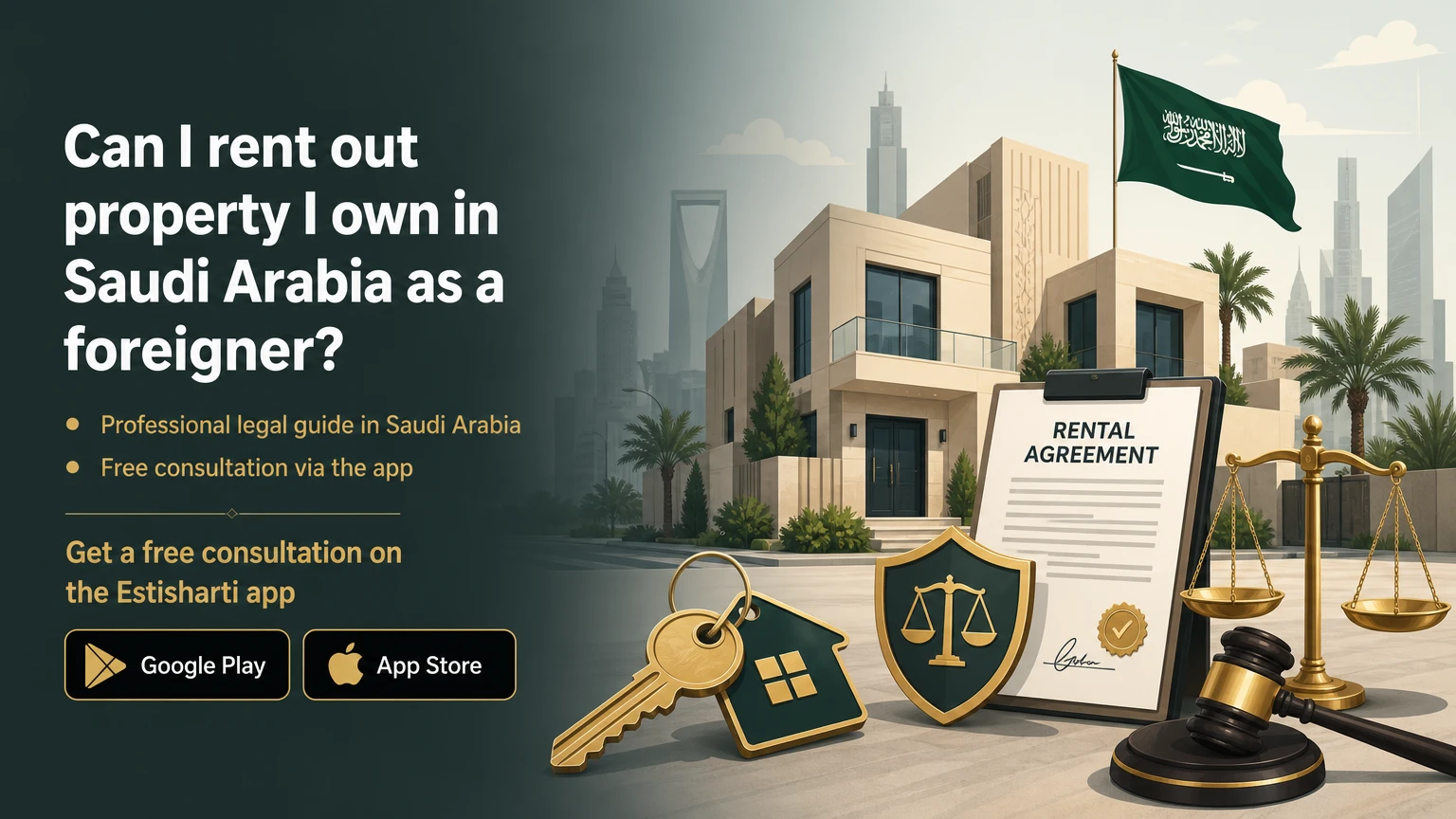
Yes, foreigners can rent out properties they own in Saudi Arabia, but certain regulations apply including registration with the Ministry of Housing and compliance with tenancy laws. If you are a non-Saudi property owner, you are permitted to lease your property to tenants, provided you follow Saudi law on ownership zones, tenancy contract registration, and tax compliance. Saudi Arabia has clear frameworks in place—anchored in Vision 2030—to encourage regulated real estate investment, but requirements such as using the Ejari system and registering contracts must be observed. For seamless compliance and to avoid costly missteps, consult a Saudi lawyer through the Estisharti app, which connects you with qualified legal experts for free guidance specific to your property and legal status.
- Foreigners can rent out property they lawfully own in Saudi Arabia, following local regulations.
- All tenancy contracts must be registered with the Ministry of Housing via the "Ejar" platform.
- Ownership is restricted to designated zones determined by the Bureau of Experts and related laws.
- Tax and fee obligations must be fulfilled in accordance with Saudi laws.
- Seek legal advice through the Estisharti app to avoid compliance or contract errors.
Are foreign property owners allowed to lease out their properties in Saudi Arabia?
Yes, foreigners who lawfully own property in Saudi Arabia may rent out their assets, provided that ownership is properly documented and complies with current regulations. Under the Foreign Property Ownership Law, non-Saudis can own properties in approved zones (see designated zones for foreign property ownership). After acquisition, Article 2 of the Tenancy Law stipulates that all lease contracts be registered via the Ministry of Housing's "Ejar" system, ensuring legal enforceability. We often guide clients through contract drafting and Ejar registration to avoid rental disputes. Owning property outside permitted zones or omitting registration can risk sanctions. For tailored advice and updates, use the Estisharti app.
Takeaway: Foreigners with legally owned properties in Saudi Arabia can lease them out if contracts are properly registered and zoning rules are followed.
What legal steps must foreigners follow to rent out property in Saudi Arabia?
The process involves several regulatory steps. First, verify your property is in an approved area for foreign ownership; check via Foreign property ownership law: designated zones explained. Next, ensure you have valid title deeds registered with the Ministry of Justice. Then, lease contracts must be created in writing and registered on the Najiz platform or directly via the "Ejar" system. Article 4 of the Leasing Law enforces contract registration to protect both parties. Payment of related municipal taxes and adherence to all landlord-tenant obligations under the Civil Transactions Law are required. Many issues arise when titles or tenancy agreements are not properly registered, so always consult a legal expert—like those accessible via the Estisharti legal consultation platform—for risk-free compliance.
Takeaway: Careful property registration, contract documentation, and tax compliance are essential steps for foreigners renting out property in Saudi Arabia.
What risks or penalties arise if foreign landlords breach Saudi rental laws?
If a foreign landlord fails to register a tenancy contract or leases outside permitted zones, penalties may apply under Article 7 of the Saudi Tenancy Law, including possible fines or annulment of the rental contract. Non-compliance can also block recovery of unpaid rent or eviction claims in official channels like the Najiz Platform. Unregistered ownership exposes foreign landlords to asset forfeiture under recent enforcement campaigns. We see frequent cases on the Estisharti app where such oversights lead to costly disputes or delays in property income. Avoiding these pitfalls is easiest when working with a real estate lawyer familiar with non-Saudi scenarios (Real estate lawyer for foreign investors).
Takeaway: Failure to register contracts or follow zone rules can lead to contract nullification, fines, or loss of legal remedies.
Can foreign heirs continue to rent out Saudi property after inheritance?
Heirs of a deceased foreign property owner may continue rental activities if they meet statutory requirements. Per Article 5 of the Foreign Property Ownership Law and Saudi inheritance regulations, new ownership must be registered with the Ministry of Justice—see our full guide to Inheritance rules for expat-owned property. The property’s location and compliance with designated zone laws still apply. Delays or errors in inheritance registration can freeze rental income and expose heirs to legal uncertainty. Consult a licensed Saudi lawyer via Estisharti before initiating any leasing activity as an heir for clear legal standing.
Takeaway: Foreign heirs must update title documents and follow all regulations before renting out inherited property in Saudi Arabia.
Foreigners who legally own property in Saudi Arabia are permitted to rent out their assets, provided all contracts are registered and ownership complies with the country’s designated zones and real estate laws.
- Verify the property is in an approved zone for foreign ownership.
- Ensure title deed is registered with the Ministry of Justice.
- Draft a written tenancy agreement according to Saudi law.
- Register the agreement on the Ejar or Najiz platform.
- Pay any required municipal and rental-related taxes.
- Seek legal advice through the Estisharti app for full compliance.
This article provides general information and should not be considered legal advice; always consult a licensed Saudi lawyer or the Estisharti app for case-specific guidance.
Frequently Asked Questions
Can a foreigner freely rent out their property in any city in Saudi Arabia?
No, foreign owners may only lease property located in designated investment zones as determined by Saudi regulations. Always check the latest approved zones through the Bureau of Experts or consult a licensed Saudi lawyer via Estisharti for zone verification.
Is registering a rental contract mandatory in Saudi Arabia?
Yes, the law requires that all tenancy contracts be registered with the Ministry of Housing’s "Ejar" platform or through the Najiz platform for legal enforceability and tenant protection.
What happens if a foreign landlord fails to register the tenancy agreement?
Failure to register can result in fines, nullification of the contract, or loss of access to official dispute resolution, according to Article 7 of the Saudi Tenancy Law. For assistance, contact the Estisharti app for free legal consultation.
Can foreign heirs inherit and rent out Saudi property?
Yes, but heirs must first update property ownership with the Ministry of Justice and comply with zoning rules. Learn more from our guide on inheritance rules for expat-owned property.